Case Study: Transforming Child-Friendly Justice Through Technology
By Kithnuwan Silva · Published · Updated
Project Overview
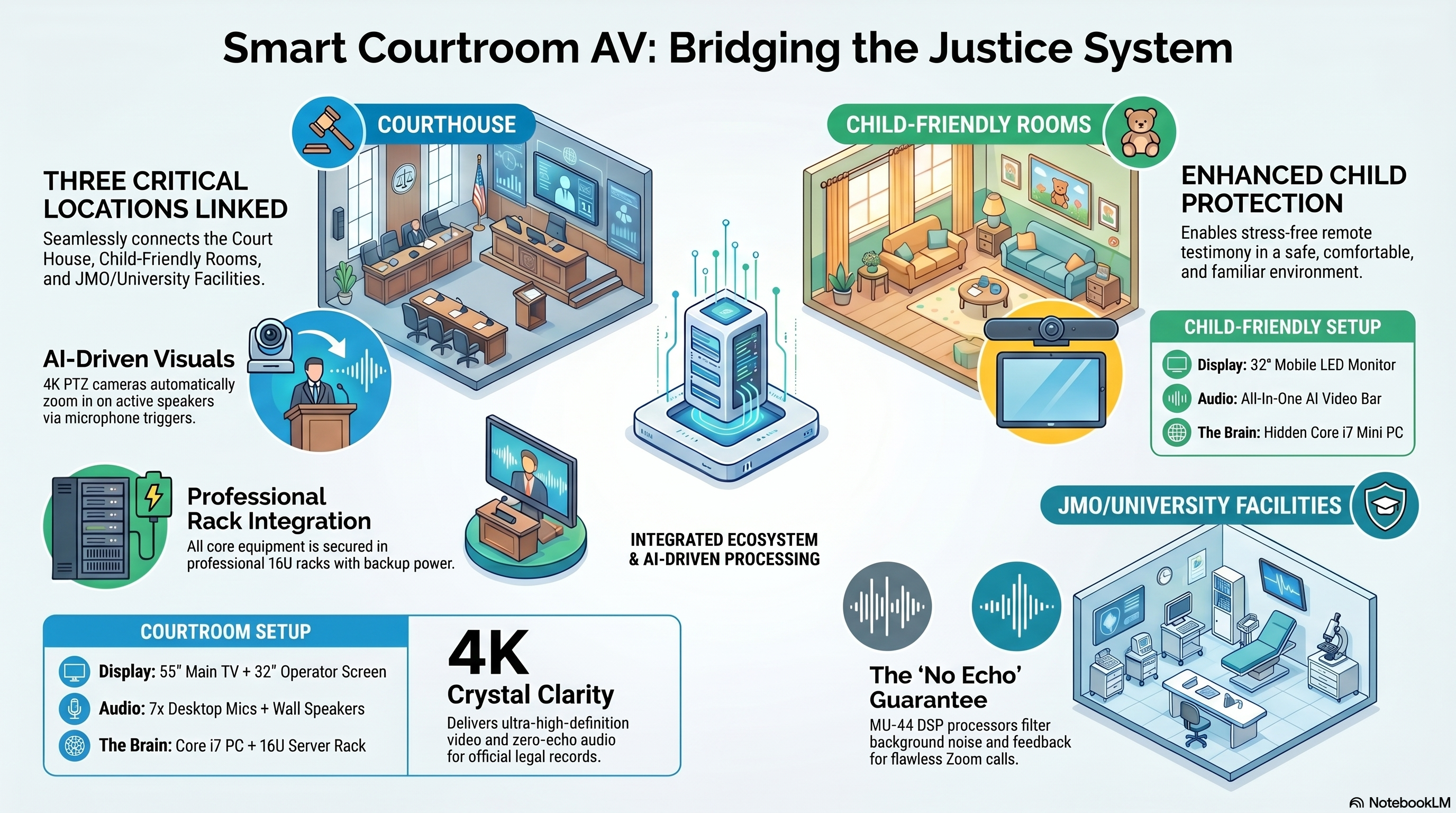
The Child-Friendly Court Modernization Project is a landmark judicial technology initiative implemented in partnership with UNICEF Sri Lanka to create a safer and more supportive environment for vulnerable child witnesses participating in legal proceedings.
As the Lead System Designer and AV Systems Integrator at Anscom, I was responsible for designing and delivering a nationwide audiovisual and unified communications platform connecting courtrooms, child-friendly testimony rooms, Judicial Medical Officer (JMO) facilities, and university forensic units.
The project was developed to reduce the psychological stress experienced by child witnesses while maintaining the integrity, transparency, and evidential requirements of the judicial process.
Project Scope
The solution connected:
- 48 Courtrooms and Child-Friendly Testimony Rooms
- 16 Judicial Medical Officer (JMO) Facilities
- 4 University Forensic Units
- Secure remote testimony and consultation facilities
The platform enables judges, lawyers, child witnesses, forensic experts, and medical officers to communicate seamlessly through high-definition video and professional-grade audio systems.
The Challenge
Traditional courtroom environments can be intimidating for children. Facing judges, lawyers, and accused individuals often creates significant emotional stress, affecting a child's ability to provide accurate and confident testimony.
The judicial system required a solution that would:
- Protect vulnerable witnesses from courtroom trauma
- Enable remote testimony without compromising legal procedures
- Provide reliable and secure communication
- Support real-time forensic and medical consultations
- Deliver professional audio and video quality suitable for evidential proceedings
- Be scalable across multiple locations nationwide
Solution Architecture
Child-Friendly Testimony Rooms
Each child-friendly room was designed as a safe and comfortable environment where children could provide testimony remotely.
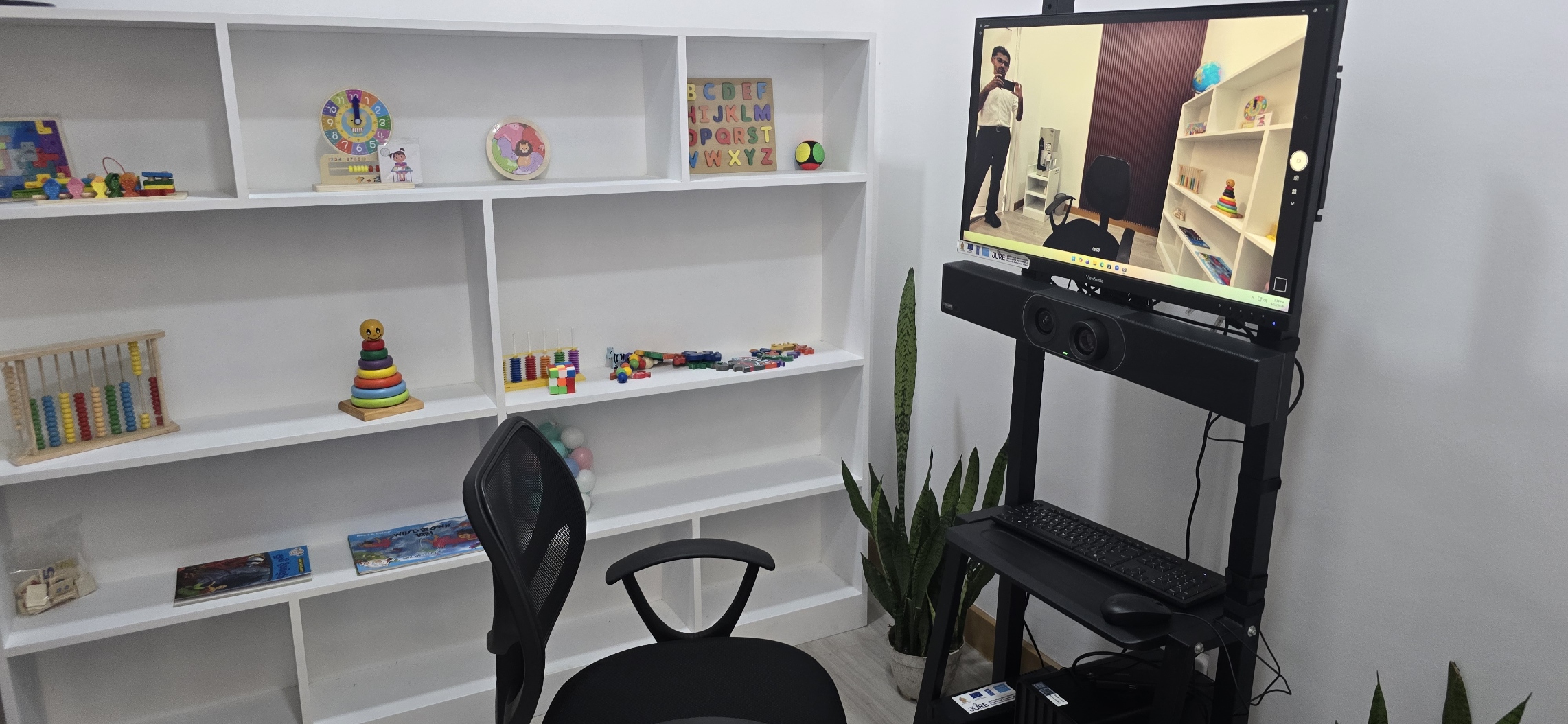
The rooms were equipped with:
- Yealink SmartVision 40 AI Collaboration Bars
- High-definition displays
- Dedicated mini PCs
- Professional audio systems
- Secure internet connectivity
- UPS-backed power protection
The SmartVision 40 provides AI-powered auto-framing and speaker tracking, ensuring natural communication without requiring camera operators or technical staff during proceedings.
Courtroom Audio and Video System Design
The courtroom environment required a highly reliable audio and video infrastructure capable of supporting both in-room discussions and remote judicial proceedings.
Restmoment Digital Conference System
Each courtroom was equipped with Restmoment digital tabletop conference microphones installed at key participant positions, including:
- Judge's bench
- Legal representatives
- Court officials
- Witness positions
The system ensures crystal-clear voice pickup and accurate transmission of every participant's speech.
Professional Digital Signal Processing
At the core of the audio system is a professional DSP audio processor responsible for:
- Acoustic Echo Cancellation (AEC)
- Automatic Noise Suppression (ANS)
- Feedback Elimination
- Audio Mixing and Routing
- Speech Enhancement
This ensures clear communication between all connected locations while preventing common conferencing issues such as echo, feedback, and background noise.
Power Amplification and Loudspeaker System
The courtroom audio system includes dedicated power amplifiers and professional loudspeakers strategically positioned throughout the courtroom.
The system provides:
- Uniform speech coverage
- High speech intelligibility
- Consistent audio levels
- Clear playback of remote participants
This ensures judges, lawyers, and court staff can hear testimony clearly regardless of whether the speaker is physically present or participating remotely.
PTZ Camera System
Each courtroom was equipped with professional PTZ cameras to provide comprehensive visual coverage.
Key functions include:
- Judge tracking
- Witness monitoring
- Wide courtroom views
- Remote participant visibility
- High-definition video streaming
The PTZ cameras enable judges and legal professionals to maintain visual engagement with remote participants while preserving the formal structure of judicial proceedings.
Connecting the Justice Ecosystem
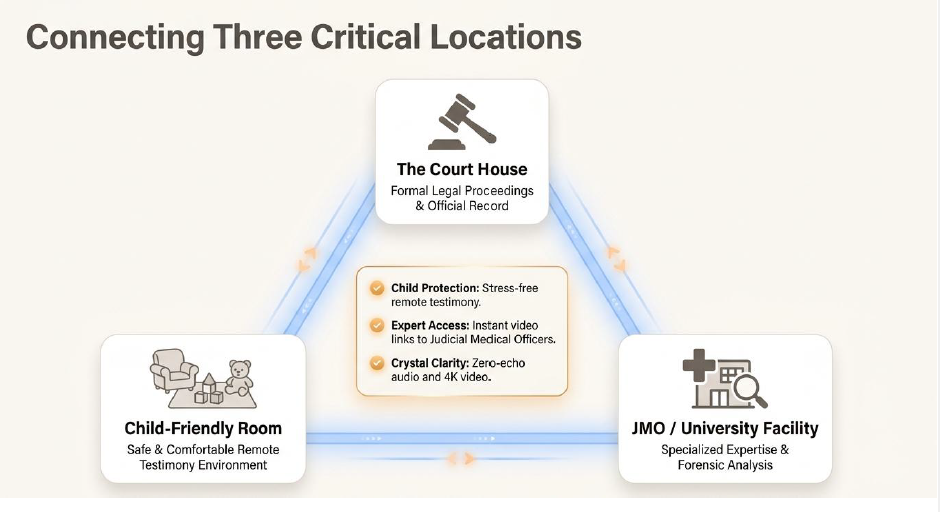
The platform creates a unified communication network connecting:
Courtrooms
Serving as the primary location for judicial proceedings and evidence presentation.
Child-Friendly Rooms
Providing a protected environment for vulnerable witnesses.
JMO Facilities
Allowing Judicial Medical Officers to provide expert testimony remotely.
University Forensic Units
Enabling forensic specialists to participate in hearings without travel requirements.
This interconnected ecosystem significantly reduces delays while improving access to expert evidence and professional consultations.