NDI vs SDI: Why NDI Makes Sense for Emerging Economies Like Sri Lanka
By Kithnuwan Silva · Published
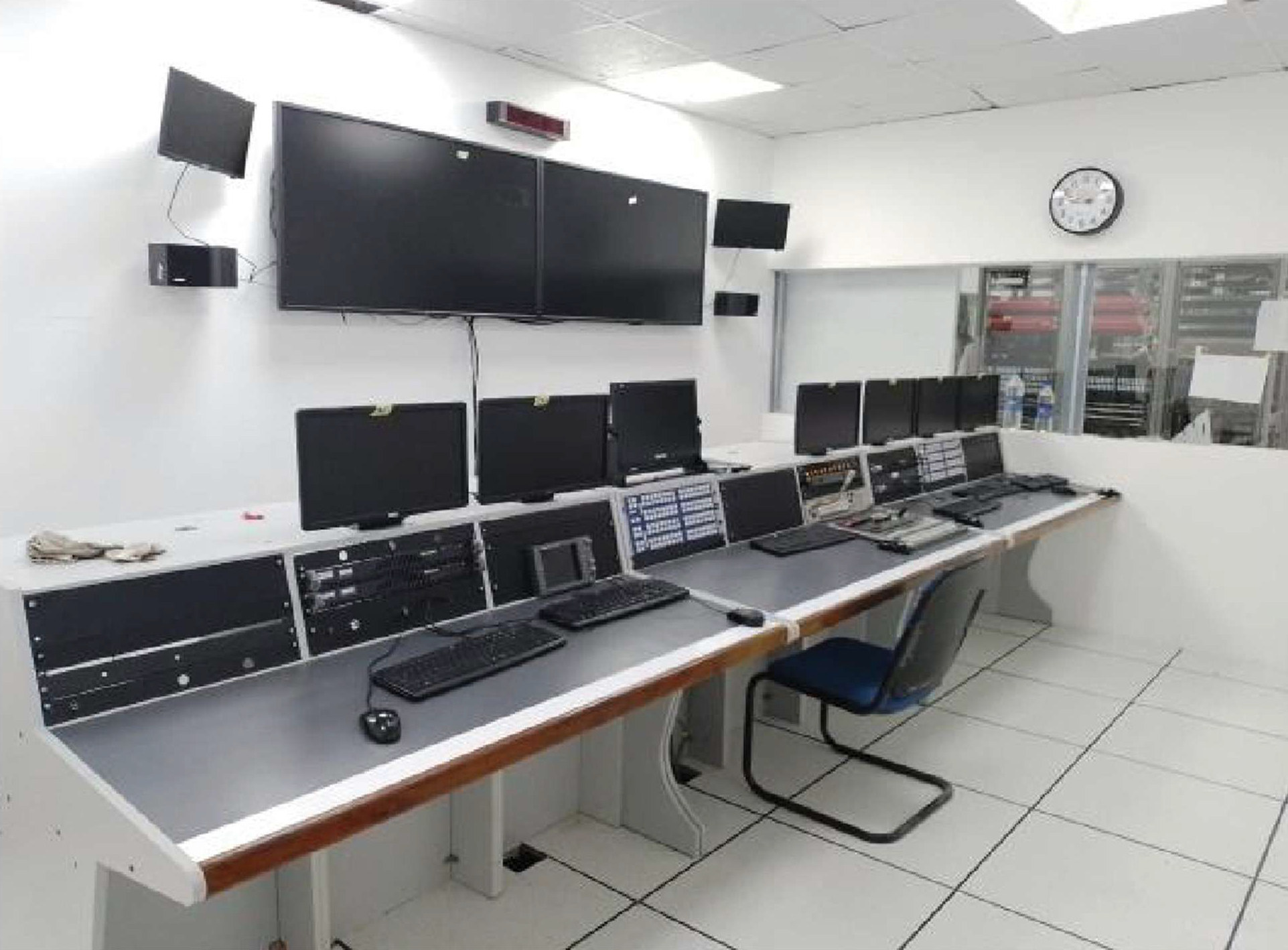
Short answer: SDI is still the safest choice for mission-critical live broadcast, but for most new studios, lecture halls, corporate and streaming facilities in Sri Lanka, NDI gives you more cameras, more flexibility and remote production for less money, because it runs on the network cabling and IT skills you already have.
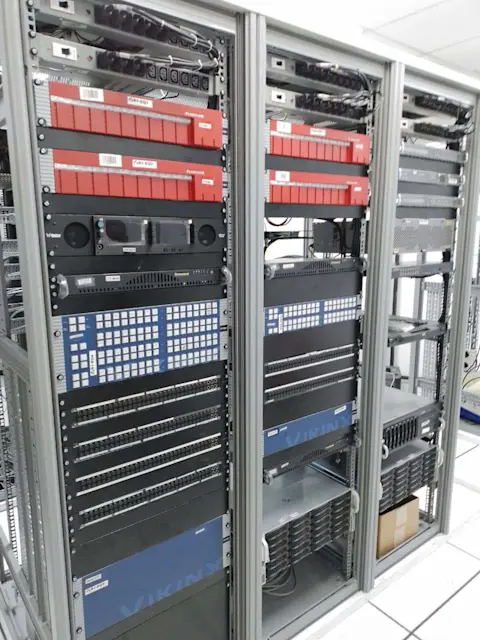
For thirty years every serious video facility was built on SDI: coaxial cable, BNC connectors and a dedicated video router. NDI (Network Device Interface) carries the same live video over an ordinary IP network instead. The question I hear most from universities, corporates and media start-ups is no longer "what is NDI?" but "is it safe to build on it instead of SDI?"
This post compares the two and explains why NDI often fits a cost-conscious market like Sri Lanka better.
What is the difference between NDI and SDI?
SDI sends one uncompressed video signal down one coaxial cable, point to point. NDI sends many compressed video streams over a standard Ethernet network, where any device can see and use any source.
SDI | NDI | |
|---|---|---|
Cable | 75-ohm coax, one signal per cable | Standard Cat6 network cable, many streams per cable |
Signal | Uncompressed | Lightly compressed (full NDI) or highly compressed (NDI HX) |
Bandwidth (1080p60) | Fixed 3 Gb/s per cable (3G-SDI) | Up to about 150 Mb/s full NDI; about 50 to 62 Mb/s NDI HX3 |
Distance | About 100 m for 3G-SDI and 50 m for 12G-SDI on good coax, then fibre or extenders | 100 m per copper link, then as far as the network reaches |
Routing | Dedicated SDI router, sized to a fixed number of inputs and outputs | The network switch; any source to any destination |
Power for cameras | Separate power supply | PoE: power and video on one cable |
Remote and multi-site | Needs fibre or specialist encoders | Over the internet with NDI Bridge, encrypted |
Latency | Effectively zero | Very low on a well-designed local network |
Who maintains it | Broadcast engineers | Network and AV engineers |
Why does NDI suit an emerging economy like Sri Lanka?
Five reasons come up again and again when I design facilities here.
- Less specialist hardware to import. An SDI facility needs coax, routers, distribution amplifiers and converters, much of it broadcast-grade equipment priced in US dollars. NDI moves most of that work onto network switches and computers, which are easier to source, service and replace locally.
- It reuses what you already have. Most offices, universities and hotels already have structured Cat6 cabling and a network team. An NDI camera can plug into that cabling, so a new studio or lecture-capture room often needs no new cable runs.
- One cable per camera. With Power over Ethernet, a single network cable carries video, power, camera control and tally. Fewer cables and power points mean faster installation and fewer things to fail, and the switch and cameras can sit on one UPS.
- Grow one camera at a time. An SDI router is bought for a fixed size, so you pay for capacity on day one. With NDI, adding a camera means adding a network port, which suits budgets that grow project by project.
- Remote production cuts travel. NDI Bridge carries encrypted NDI streams over the internet, so a production can be switched in Colombo from cameras in Kandy or Galle, or a guest can join a podcast from abroad, without sending a crew and an OB van.
There is a skills advantage too: network engineers are far easier to find and train than specialist SDI broadcast engineers, and free NDI tools let a team learn and test on ordinary laptops before buying anything.
Where does SDI still win?
NDI is not the answer to everything. SDI remains the better choice when:
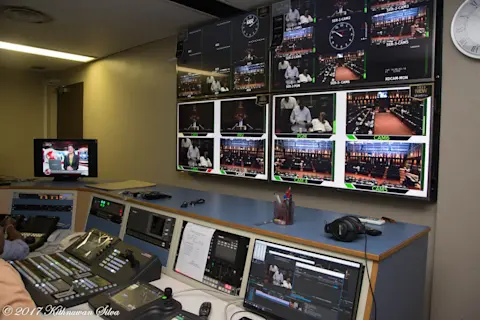
- The signal must never drop. For national broadcast and parliamentary sessions, the deterministic, uncompressed and network-independent nature of SDI is worth its cost. The Parliament of Sri Lanka's Full HD multilingual broadcasting upgrade, for example, is built around 64×64 HD-SDI routing.
- The network cannot be trusted. If the video has to share an unmanaged office network with everyday traffic, SDI is safer than NDI on a poorly designed switch.
- Every frame of latency matters, for example camera feeds to an in-room projection screen during a live performance.
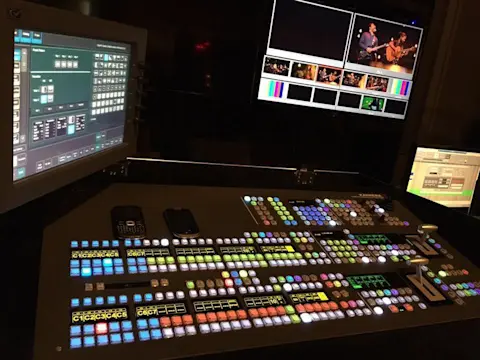
In practice most new facilities end up hybrid: SDI inside the core gallery where it matters, converters at the edge, and NDI for everything that needs to move around a building or a country.
What does a reliable NDI network need?
Most NDI problems are network problems. Before you commit, make sure the design includes:
- Managed switches with IGMP snooping and QoS, not unmanaged office switches.
- A separate VLAN for video, so office traffic cannot interrupt a live show.
- Bandwidth headroom: plan on up to about 150 Mb/s per full-NDI 1080p60 stream, and 10 Gb uplinks between switches.
- Enough PoE budget on the switch for every camera, with the switch on a UPS.
- A discovery server on larger networks, so sources appear reliably across VLANs and sites.
- Testing on the real network with the real number of streams before handover.
Which projects suit NDI in Sri Lanka?
- Corporate broadcast and live-streaming studios
- Podcast studios
- University lecture capture and hybrid classrooms
- Temple, church and event streaming
- Multi-camera productions spread across a campus or between cities
Frequently asked questions
Is NDI good enough for broadcast?
For many productions, yes. Since NDI 6, it supports 10-bit HDR, which makes it usable in broadcast workflows that were previously limited by 8-bit colour. For the most critical live transmission chains, many broadcasters still keep SDI or SMPTE 2110 at the core.
What is the difference between full NDI and NDI HX?
Full NDI uses light compression and needs more bandwidth, up to about 150 Mb/s at 1080p60, with very low delay. NDI HX3 uses H.264 or H.265 compression and needs only about 50 to 62 Mb/s, which suits PTZ cameras, Wi-Fi links and busier networks.
Can I mix NDI and SDI equipment?
Yes. Converters turn SDI cameras and outputs into NDI sources and back, so existing SDI equipment does not have to be replaced to start using NDI.
Can NDI run on our existing office network?
Sometimes, but it is safer on its own VLAN with managed switches. A short network survey before the project shows whether the existing switches and uplinks can carry the expected number of streams.
The bottom line
SDI is still the gold standard where a signal must never fail. For almost everything else, NDI lets Sri Lankan organisations build more capable studios, lecture halls and streaming facilities on the network and skills they already have, grow them one camera at a time, and produce remotely instead of sending crews across the country.